


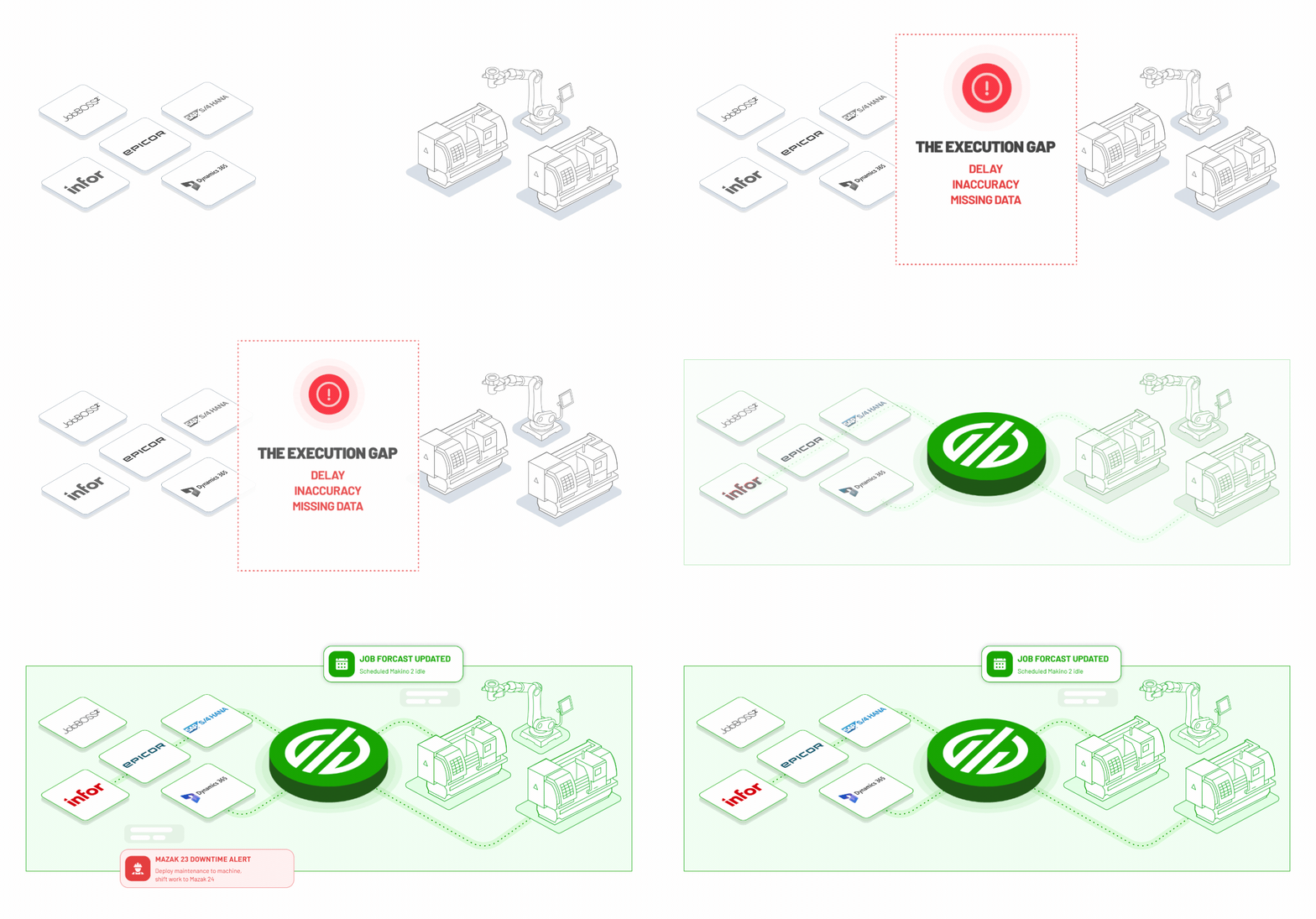
TL;DR: The manufacturing execution gap is the widening space between what your business systems plan and what actually happens on your shop floor. ERP systems plan production well. But the moment that plan hits the floor, reality diverges: machines break down, priorities shift, and operators need setup guidance that lives in someone's head. Traditional MES systems only record these deviations after the fact. The result is a familiar set of symptoms: supervisors reshuffling priorities mid-shift on stale schedule data, operators interrupting peers for setup guidance, managers spending hours reconciling spreadsheets, and decisions made too late to prevent a missed delivery or a quality escape. This post explains what the execution gap is, where it comes from, and what it costs a typical discrete manufacturer every year.
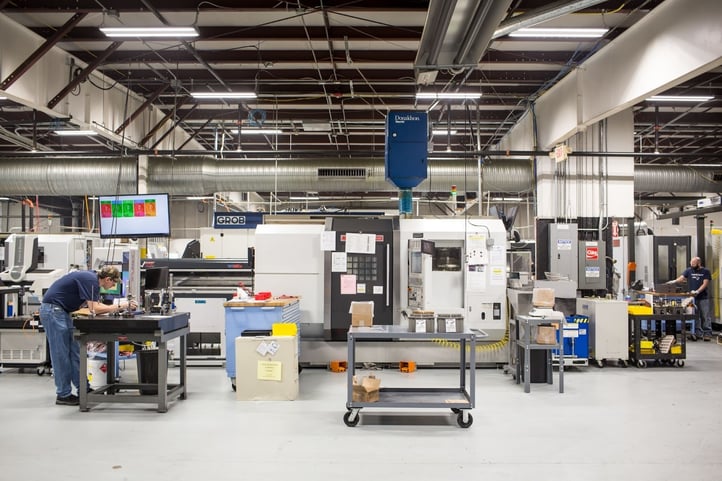
Your ERP says Job #4471 is on schedule. Your floor supervisor knows it isn't. But that information won't reach the people making decisions until well after the damage is done.
That gap, between what the system says and what the floor knows, is called the manufacturing execution gap. It isn't a technology failure. It's a structural problem built into how most discrete manufacturers connect planning to production. Until you name it, you can't fix it.
Why the Manufacturing Execution Gap Exists
Every discrete manufacturer runs two parallel systems that were never designed to talk to each other in real time.
The first is your ERP. It holds your production schedule, your work orders, your delivery commitments, and your materials plan. It's where the business lives.
The second is your shop floor. Fifty, eighty, a hundred and fifty machines running jobs, consuming materials, generating production data with every cycle.
The problem lies in between. For most manufacturers, the connection between these two systems runs through people. Operators log what jobs they're running. Supervisors enter downtime events. Production coordinators manually reconcile what the ERP planned against what actually shipped. At shift end, someone pulls a report.
By the time that data reaches the ERP, if it does, it's hours old. Often it's incomplete. Sometimes it's wrong because an operator was too busy keeping a machine running to stop and enter data correctly.
That's the manufacturing execution gap: the delay, the inaccuracy, and the missing information that sits between ERP planning and shop floor reality.
The Real Cost of the Manufacturing Execution Gap
When your production data is hours old and operator-entered, every downstream decision is based on a picture of the floor that no longer exists. Your scheduler is working from a static snapshot or a patchwork of spreadsheets, not a live view of what's actually happening on the floor. Your supervisor is making staffing calls based on what someone told them an hour ago. Your VP of Operations is reviewing a report that was stale before it was printed.
The cost shows up in four places.
Missed delivery commitments. When supervisors can't see real-time job status, lateness gets discovered too late to course-correct. The result is missed due dates, dissatisfied customers, and pressure to expedite, which creates chaos elsewhere in the schedule. When the ERP schedule changes, a rush order, a material shortage, or a quality hold, how long before the floor knows? In most operations, the answer is hours. By then, jobs that could have been reprioritized are already in process. Deliveries that could have been rescheduled proactively become late reactively. That's not a planning failure. That's an execution gap failure.
Inaccurate costing and capacity planning. When shop floor actuals never make it back to the ERP cleanly, the business plans future jobs on bad data: inflated cycle times, unaccounted downtime, and capacity assumptions that don't reflect reality. This compounds over time, quietly eroding margin in ways that rarely trace back to a single root cause.
Wasted labor and supervisory overhead. Managers spend significant time every day manually reconciling ERP data with what actually happened on the floor. That's highly skilled labor consumed by administrative firefighting rather than floor management. It's also time supervisors aren't spending catching problems early.
Erosion of trust in system data. This is the most strategically damaging cost of all. When people stop trusting their ERP and MES, they revert to whiteboards, text messages, and tribal knowledge. Continuous improvement initiatives stall because the data foundation is unreliable. Every future technology investment starts from a weakened position.
Why "More Data" Doesn't Solve It
The natural response to the execution gap is more visibility tools. Dashboards. Reports. Analytics platforms. Those investments often produce a version of the same outcome: more data that still doesn't reflect what's happening on the floor right now, because the data is still coming from operator-entered inputs.
The execution gap isn't a visibility problem. It's a data origin problem.
As long as an operator typing into a system is the source of production truth, between jobs, at shift end, when they remember, the information will always lag reality. Dashboards built on manually-entered data are not real-time dashboards. They're real-time displays of delayed information. That's a meaningful distinction, and it's worth sitting with.
Any system you're evaluating, or already running, deserves a direct question:
Does it pull production data directly from your machines, or do operators enter it? And if operators enter it, how long after the event does that entry typically happen?
If the answer is "operators enter it," the execution gap is still open. Systems that pull data directly from machines close that gap at the source, before it can widen.
What Closing the Manufacturing Execution Gap Looks Like
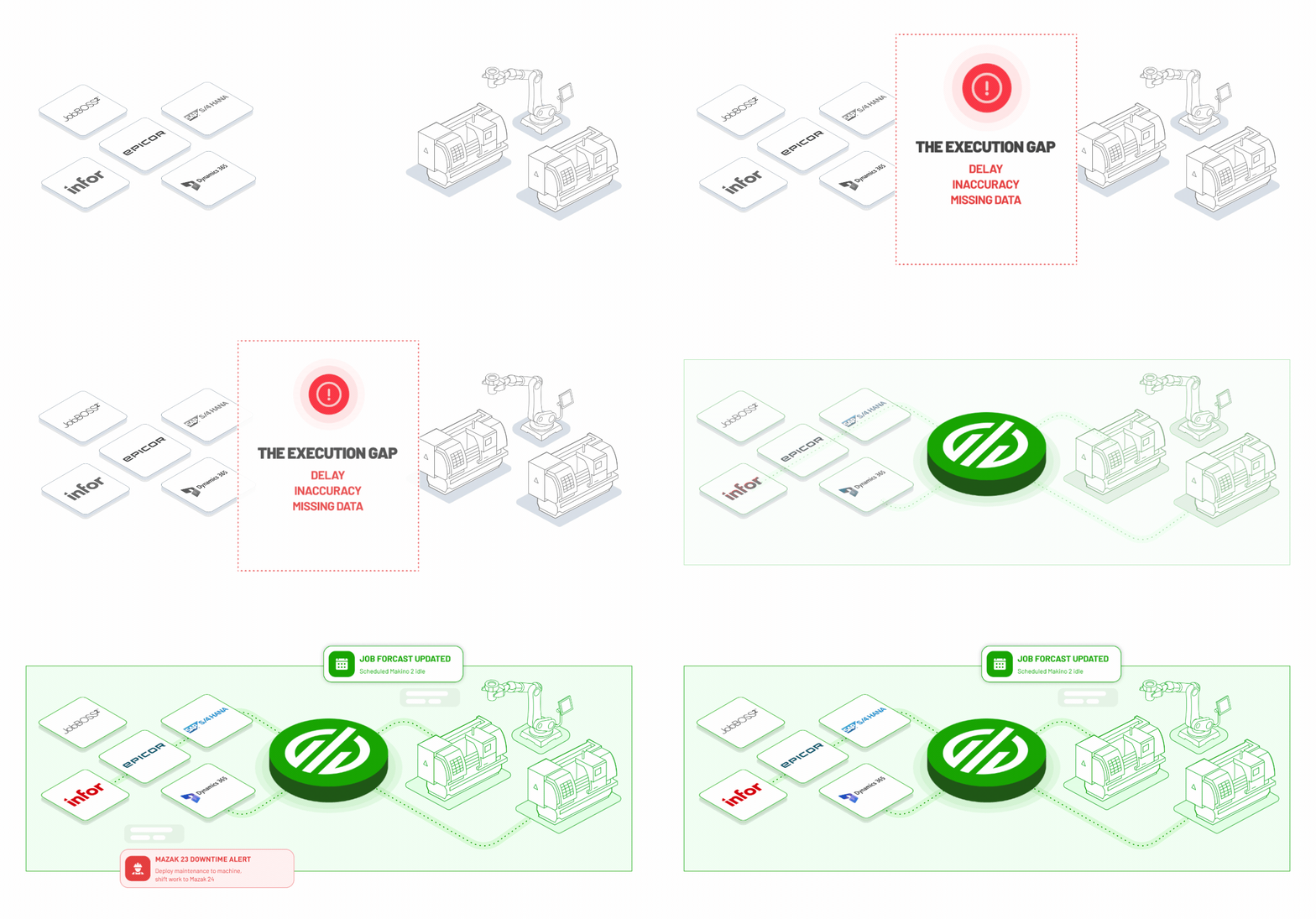
Closing the execution gap doesn't require more technology. It requires technology that works differently, where machines report their own reality automatically, and that reality flows directly into every decision being made above it.
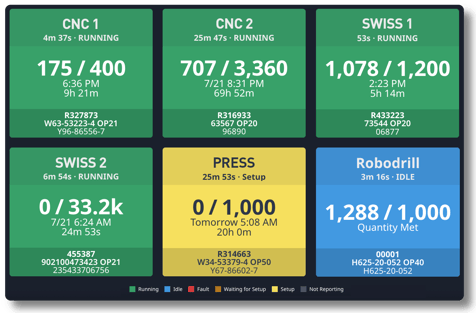
When that connection exists, something fundamental changes. The schedule isn't a plan that degrades over the course of a shift. It becomes a living view of what's actually running, what's behind, and what's at risk, updated by the machines themselves rather than by memory or manual entry.
The nature of the work changes with it. Schedulers stop reconciling last night's actuals and start managing today's outcomes. Supervisors stop discovering problems at shift end and start resolving them in real time. Executives stop asking "what happened last week?" and start asking "what do we do next?" because the data in front of them reflects what's actually true.
The operations that have made this shift aren't running more complex systems. They're running more honest ones. Their systems reflect reality. And when your systems reflect reality, you stop managing the gap between plan and floor, and you start executing.
The Execution Gap Is Costing You, Whether You've Named It or Not
Most manufacturers haven't failed to solve the execution gap. They've failed to name it.
Late deliveries get blamed on scheduling. Margin surprises get blamed on quoting. Supervisor burnout gets blamed on headcount. But underneath most of those symptoms is the same root cause: production systems that depend on people to report what machines already know.
That's not a manufacturing reality. It's a design flaw inherited from an era before machine controllers could speak for themselves. And it's one that's now fixable in weeks, not years.
The gap is measurable. It's preventable. Every shift it stays open, it costs you in ways that don't always show up on the same line item that caused them.
One question cuts through it: Does your production system learn what happened from your machines, or from your operators?
If the answer is operators, we can show you what changes when it isn't. Thirty minutes, your ERP, your machine mix, real production data.